
Simatai Great Wall — History, Significance and Why It Still Inspires Awe
The Simatai Great Wall (司马台长城) is one of the most historically rich, visually dramatic, and architecturally authentic sections of Great Wall of China. Located about 120 km northeast of Beijing’s city center in the Miyun District, Simatai holds a unique place among Great Wall sections thanks to its complex history, steep mountainous terrain, and remarkably preserved Ming‑era structure.
Origins and Historical Evolution
The earliest construction of Simatai dates back to the Northern Qi dynasty (550–577 AD). Over the centuries, the Great Wall in various regions underwent cycles of decay, rebuilding, and expansion. The version of Simatai that stands today was largely rebuilt during the founding years of the Ming dynasty under the reign of the first Ming emperor, and later maintained and modified during the Longqing and Wanli periods.
During the Ming dynasty (1368–1644), defense against northern invaders was a major concern. The reconstruction and reinforcement of Simatai were overseen by the renowned general Qi Jiguang. Under his supervision, the wall was built using high‑quality bricks — each stamped with the date of manufacture and with the army unit code. This was done to ensure strict accountability and craftsmanship when producing materials for such a strategically critical defensive structure.
Over time, Simatai became part of the defensive network guarding the eastern passes of the Great Wall, forming an important link to Gubeikou — a historically strategic pass.
In 1987, the Great Wall (including Simatai) was inscribed on the UNESCO World Heritage List, recognizing its outstanding universal value as a cultural monument.
Architectural Features & Unique Landscape
Simatai is roughly 5.4 km long and includes 35 beacon/watch towers. What makes it especially remarkable is its dramatic terrain and the contrast between its eastern and western parts:
- Western part — more gently sloped; historically having around 19–20 watchtowers.
- Eastern part — extremely steep, clinging to mountain ridges of the Yan Mountains (Yanshan). It features rugged cliffs, sharp ascents, narrow stone paths, and closely spaced towers — some only a few meters apart.
Some of the most famous and dramatic landmarks along Simatai include:
- “Heavenly Ladder” (Stairway to Heaven) — a nearly vertical stone stairway (about 80–85° incline, ~100 meters long), leading up the mountainside, often described as a “ladder to the sky.”

- “Fairy Maiden Tower” (No. 15 East Tower) — built on a cliff, accessed via the Heavenly Ladder; narrow, steep, with unique architectural details (arched doors, lotus‑pattern carvings). According to legend, it was once the dwelling of a fairy or immortal maiden — giving it a mystical aura.
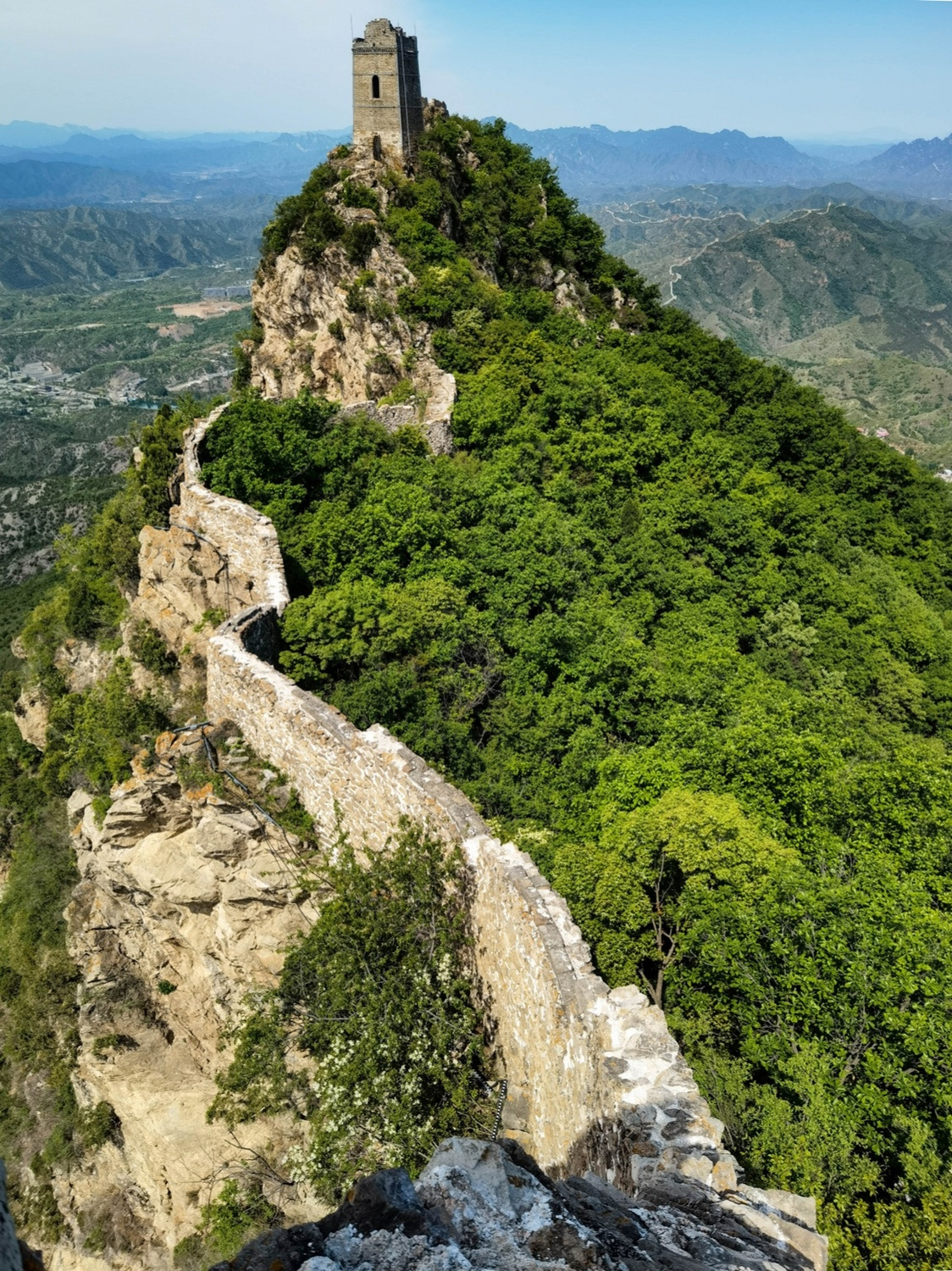
- Wangjing Tower (No. 16 East Tower) — the highest point of Simatai, at about 986 meters elevation, considered the summit of the Simatai scenic area. On clear nights, visitors can reportedly see the distant lights of Beijing, some 120 km away.

- Diverse tower architecture — towers of square, hexagonal or oval shapes; some with two, three or even more arrow‑slits; variation in tower styles reflects the adaptive use of terrain and needs for defense and observation.
Because of the steep terrain and narrow walkways, Simatai offers a far more rugged and authentic Great Wall experience than highly restored, more tourist‑oriented sections. Portions remain unrestored and unmodernized — maintaining the original character of Ming‑era construction.
Why Simatai Still Matters — Heritage, Tourism & Challenge
- Authenticity: Unlike many other restored Great Wall sections, Simatai retains its original Ming appearance. Renovations have been limited to essential reinforcements — preserving authenticity over modernization.
- Popularity among connoisseurs: A Chinese Great Wall expert, Luo Zhewen, once said “The Great Wall is the best of the Chinese buildings, and Simatai is the best of the Great Wall.”
- Scenic significance: In 2012, Simatai was ranked first among “World’s Top 25 Scenic Spots Not to be Missed” by the British newspaper The Times.
- Unique visitor experience: It is the only major section of the Great Wall available for night tours — offering a spectacular and rare view when towers and pathways are illuminated.
- Access via cable car: Given the steep terrain, there is an open‑air cable car that helps visitors reach higher parts of the Wall with less physical strain — making the otherwise strenuous climb more accessible.
At the same time, Simatai’s challenging terrain — narrow, steep pathways, cliff‑hanger staircases, and uneven surfaces — reminds visitors that this isn’t a theme‑park version of the Great Wall, but a piece of living history that demands respect, care, and a bit of stamina.
Simatai in the Bigger Picture of Great Wall History
The Great Wall of China was not built in a single period — over millennia, different dynasties constructed, expanded, repaired, or abandoned different segments in response to shifting threat landscapes. Simatai’s origins in the Northern Qi dynasty, combined with major rebuilding during the Ming dynasty, reflect this layered history.
Moreover, Simatai demonstrates the evolution of military architecture: from simple earthen ramparts to intricately constructed brick-and‑stone fortifications with watchtowers, battlements, and beacons — adapting to the rugged mountainous terrain of the Yan Mountains and the strategic needs of frontier defense in Ming China.
Simatai’s survival into the modern era — with much of its Ming‑era structure intact — offers scholars, historians, architects and travelers a rare window into traditional Chinese military construction, ancient brickmaking practices, and the daunting logistical challenge of building a defensive wall over rugged highlands.


