

The Mutianyu Great Wall stands as one of the most celebrated and well‑preserved sections of the vast network of Great Wall of China. Nestled in the hills of Huairou District, northeast of Beijing, this section is not only rich with history but also boasts breathtaking natural beauty that changes dramatically with the seasons. For travelers, historians, and lovers of architecture, Mutianyu offers a profound glimpse into China’s imperial past and the enduring legacy of defensive engineering.
Early Origins: From Northern Qi to Ming Foundations
The origins of the Mutianyu Great Wall date back more than 1,400 years. The initial construction began in the mid‑6th century during the reign of the Northern Qi Dynasty (550–577). On the foundation of that early wall, the present structure owes its existence.
Though the Northern Qi wall laid the groundwork, the Mutianyu section acquired its enduring form during the reign of Xu Da under the founding emperor of the Ming Dynasty. The Ming rebuild transformed Mutianyu into a formidable bulwark, constructed with granite and fortified to defend the capital and the imperial tombs.
Over the centuries, this section experienced multiple reconstructions. Between the “Hongwu” (early Ming) period and the “Wanli” era, Mutianyu was rebuilt as many as 18 times, reflecting its strategic importance and the continuing need to maintain a strong defensive line.
Strategic Importance: Shield of the Capital
Mutianyu’s value was not just architectural but deeply strategic. Positioned to guard the approaches to the capital, its location between mountain ridges made it a key defensive barrier against invasions. It served as the northern protective screen of the capital region, safeguarding not just the city but also the imperial tombs and adjacent passes.
The wall section links important passes and connects eastern and western segments of the Great Wall system: from the eastern approaches (like Gubeikou Great Wall) to western approaches including Juyongguan and Badaling Great Wall — making it a central node in the network of imperial defenses.
Architectural Features and Defensive Design

What truly sets Mutianyu apart — architecturally — are its distinctive design features and robust construction. The wall is built mainly with granite, giving it solid durability over centuries. It rises approximately 7–8 meters high, and its top is about 4–5 meters wide, allowing room for patrolling soldiers or caravans of soldiers marching side-by-side.
One of the hallmarks of this section is the density and number of its watchtowers: along this 2.25‑kilometre long restored stretch there are 22 watchtowers positioned very close to one another — a density rarely seen elsewhere on the Great Wall.
Moreover, Mutianyu features crenelated parapets on both sides (inner and outer), allowing defenders to fire on enemies from either direction — a defensive design that reflects the seriousness of its protective role.
A particularly unique structure within this section is the “pass” (or gate area), which consists of three connected watchtowers: a large central tower flanked by two smaller ones, all standing on the same terrace and internally connected. This arrangement is rare across all Great Wall sections.
These structures — from main wall, passes, to branch walls — demonstrate an integration of ancient military engineering with the mountainous landscape, showcasing strategic planning and building craftsmanship of imperial China.
Natural Beauty and Seasonal Charm
Beyond its martial function, Mutianyu embraces natural beauty that changes across seasons. Surrounded by forested hills, the vegetation coverage rate in the scenic area is over 96%.
- In spring, mountain flowers such as peach blossoms, apricot blossoms, azaleas and more begin to bloom, painting the slopes with soft colors.
- In summer, lush green covers the ridges and valleys; streams flow gently and the woods offer refreshing shade.
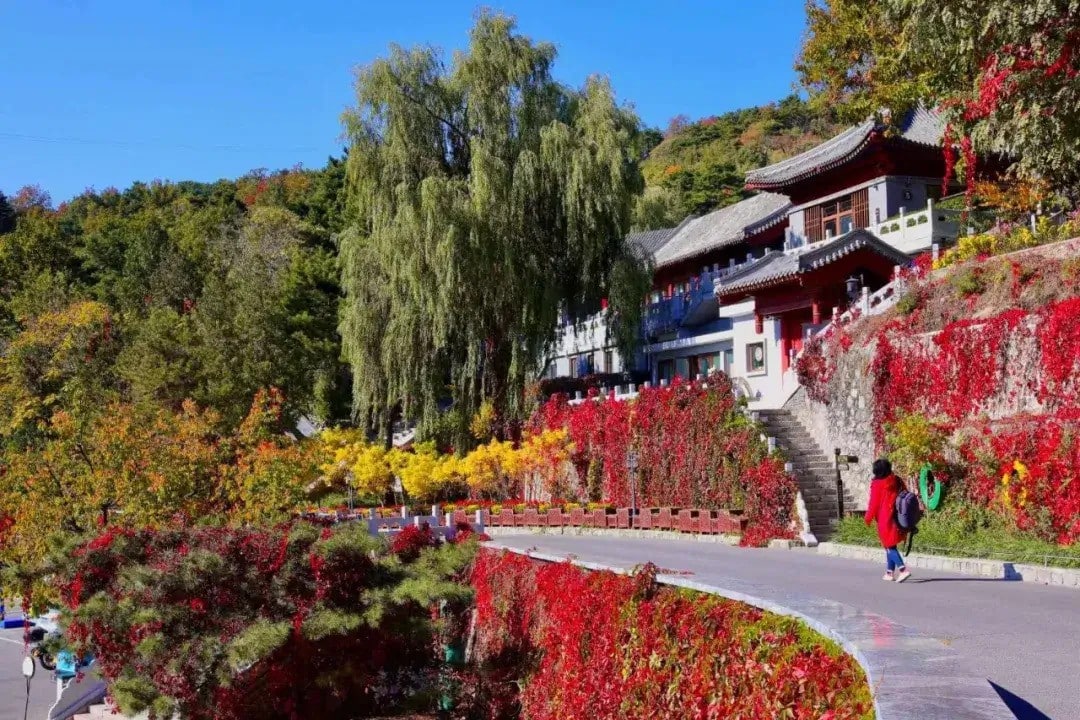
- In autumn, the hills come alive with golden and red foliage — maple, oak, chestnut, and other deciduous trees mingling with evergreen pines — offering some of the most iconic, picturesque Great Wall views.
- In winter, with snow covering the wall and surrounding hills, Mutianyu transforms into a majestic and serene winter landscape that feels timeless and almost otherworldly.
Pine trees near the wall include many ancient specimens — over 20 pines older than 300 years, and about 200 older than 100 years — further contributing to the ancient, enduring atmosphere.
The combination of historical architecture and natural environment makes Mutianyu not just a martial relic, but also a place of tranquility, reflection, and scenic wonder.
From Decline to Restoration — 20th Century to Modern Tourism
Although originally a defensive stronghold, this portion of the Great Wall — like many others — experienced periods of neglect. However, beginning in the 1980s, efforts were made to restore and preserve Mutianyu. Restorations during 1983–1986 helped bring back the structural integrity of the wall.
In 1988, the section was opened to public visitors. Since then, Mutianyu has gained acclaim not only for preservation but also for being more accessible and visitor‑friendly than many other, more rugged parts of the Great Wall.
Over time, it was incorporated into the official list of scenic/cultural‑heritage sites — recognized for both historic value and tourism importance.
Today, Mutianyu is regarded as the “essence” of the Ming‑dynasty Great Wall, often described as one of the most beautiful and representative sections open to visitors.
Legacy: Why Mutianyu Matters
Mutianyu Great Wall stands out because it combines military heritage, architectural craftsmanship, and natural beauty — a trifecta rarely preserved so intact. Its well‑planned watchtowers, dual crenellations, and strategic passes reflect ancient China’s efforts to protect the heart of its empire.
At the same time, the harmony between wall and mountain — stone following ridgeline, towers crowning hilltops, springs and forests below — reveals a profound respect for landscape. Visitors today can hike along walls built over a millennium ago, absorb autumnal colors, breathe crisp mountain air, and walk the same paths once trod by ancient soldiers.
For travelers and history lovers alike, Mutianyu offers more than a scenic spot — it is a living monument to China’s enduring past, a place where nature and human endeavor converge in stone and forest.


