
Temple of Heaven (Tiāntán, 天坛) – History, Architecture, and Cultural Significance
The Temple of Heaven, known in Chinese as Tiāntán (天坛), is one of Beijing’s most iconic historical monuments and a UNESCO World Heritage Site. Located in the southeastern part of Beijing, this vast complex was constructed in 1420 during the Ming Dynasty under Emperor Yongle, the same ruler responsible for the construction of the Forbidden City. Unlike palaces intended for residence, the Temple of Heaven was purely a sacred space where emperors performed elaborate ceremonies to honor Heaven, pray for good harvests, and ensure harmony between the celestial and earthly realms.
The design of the Temple of Heaven embodies ancient Chinese cosmology. The complex is organized according to the concept of “round Heaven and square Earth,” a principle deeply rooted in Chinese philosophy. Covering an area of nearly 2.7 million square meters, the site is not only architecturally grand but also spiritually symbolic, reflecting the emperor’s role as the “Son of Heaven,” the intermediary between Heaven and humanity.
Hall of Prayer for Good Harvests (Qiánqiú Dìng Diàn, 祈年殿)
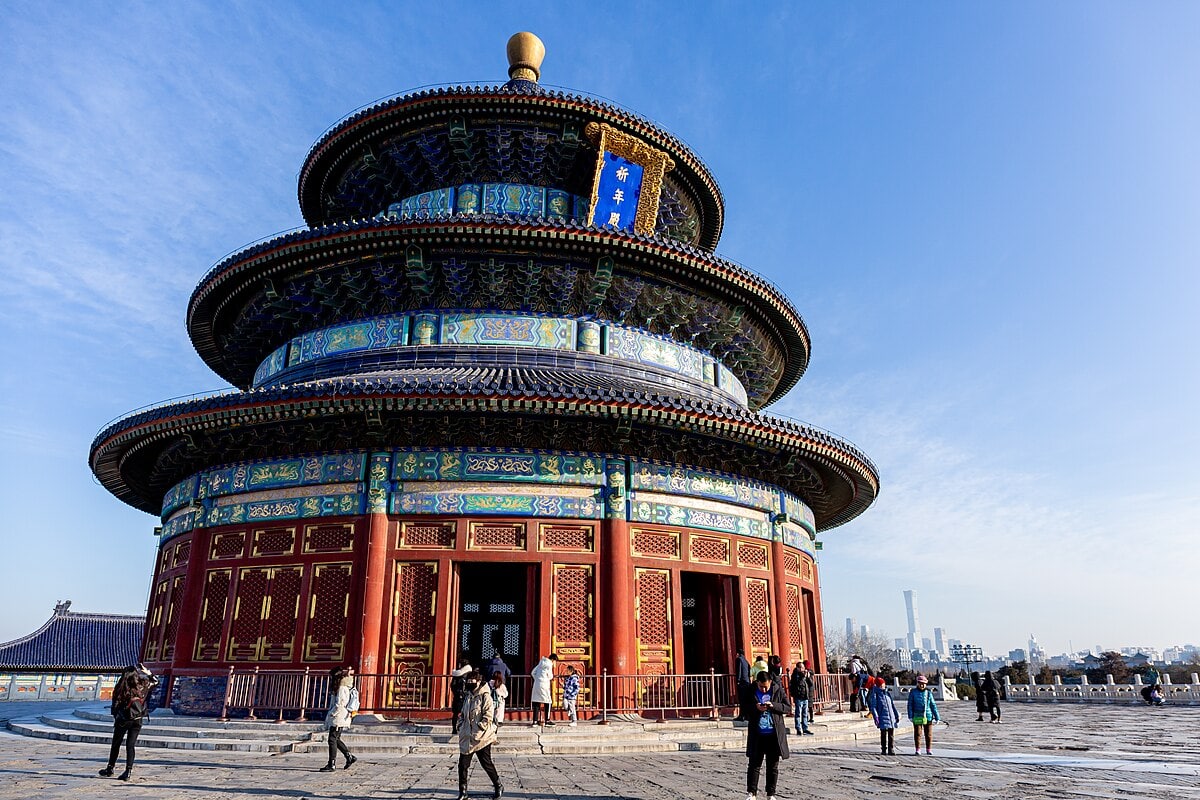 The Hall of Prayer for Good Harvests – a triple-gabled circular wooden structure without nails, decorated with blue-glazed tiles symbolizing the sky.
The Hall of Prayer for Good Harvests is the most renowned building in the Temple of Heaven complex. This magnificent circular hall is entirely made of wood without using a single nail. Supported by 28 massive wooden pillars, the hall is adorned with blue-glazed roof tiles that symbolize the sky and intricate golden decorations that reflect imperial grandeur. Every year, the emperor would conduct rituals here to pray for a bountiful harvest, emphasizing the vital relationship between ruler, nature, and Heaven.
The architecture of the hall is a marvel of engineering and design. Its circular shape represents Heaven, while the square base of the hall symbolizes Earth. The building’s wooden pillars and detailed carvings showcase the craftsmanship and artistic sophistication of Ming Dynasty architects and artisans.
Circular Mound Altar (Yuánqiū, 圆丘坛)
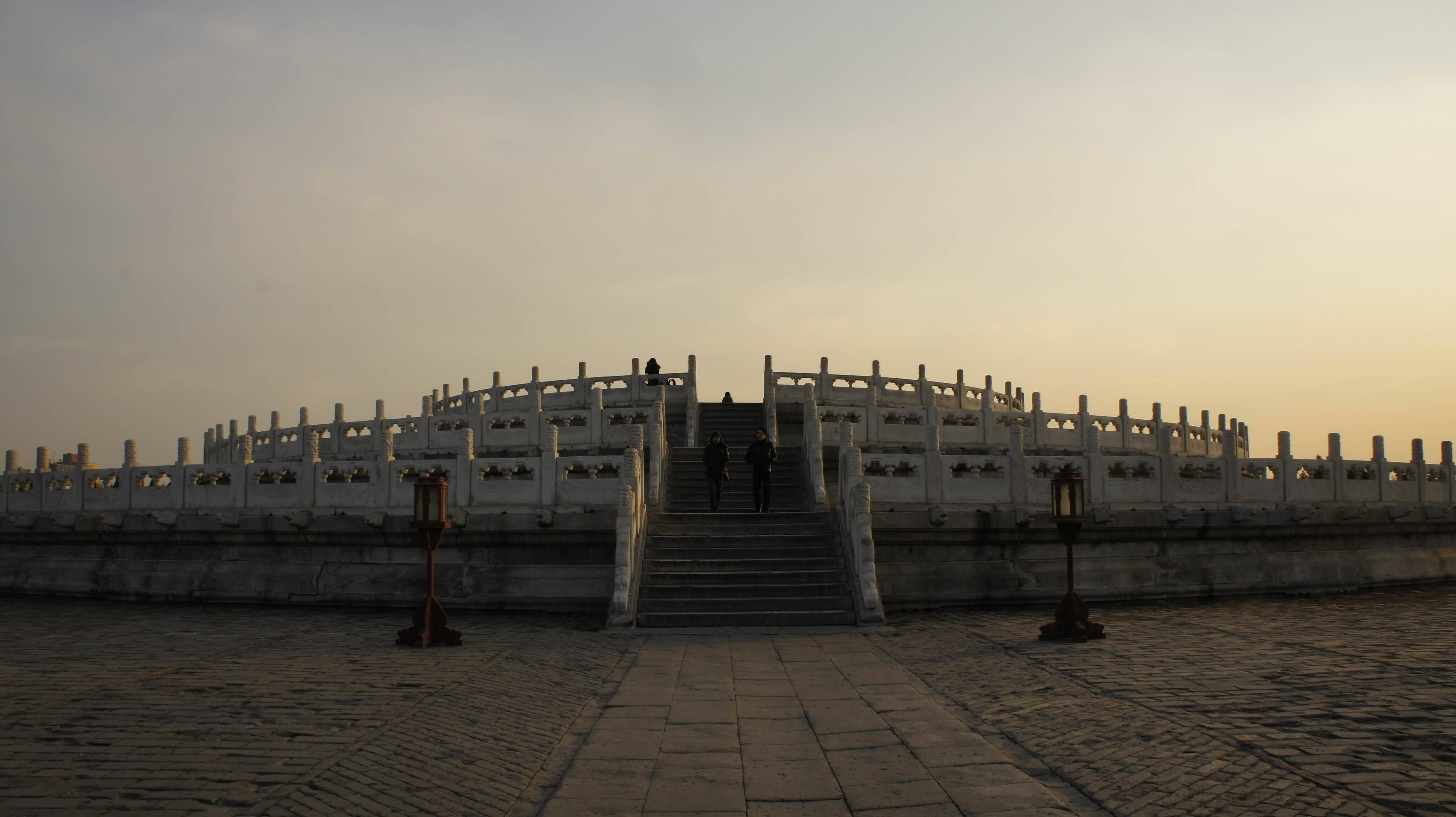 The Circular Mound Altar – an open-air marble platform designed for winter solstice sacrifices, with acoustics that amplify the emperor’s prayers.
The Circular Mound Altar is an open-air platform built with concentric layers of white marble. The emperor conducted sacrificial ceremonies here during the winter solstice, offering prayers and symbolic offerings to Heaven. The altar’s design enhances acoustics, allowing the emperor’s voice to carry naturally upward—a reflection of ancient Chinese knowledge of sound, mathematics, and astronomy.
The layout of the altar is rich with symbolism. Each layer of marble represents different levels of the cosmos, and the central point corresponds to the position of the emperor as the cosmic center. The precise alignment demonstrates the meticulous planning and cosmological understanding of the Ming and Qing architects.
Imperial Vault of Heaven (Huángqiū Diàn, 皇穹宇) & Echo Wall
 The Imperial Vault of Heaven – home to the Echo Wall, a circular structure that transmits whispers across long distances.
The Imperial Vault of Heaven is another prominent site within the Temple of Heaven complex. Its most intriguing feature is the Echo Wall, a circular wall that carries sound exceptionally well. A whisper on one side of the wall can be heard clearly on the opposite side, fascinating visitors with its acoustic phenomenon. The vault served as a storage place for sacred ceremonial tablets and relics and was integral to the annual rites performed by the emperor.
Architectural and Cosmological Significance
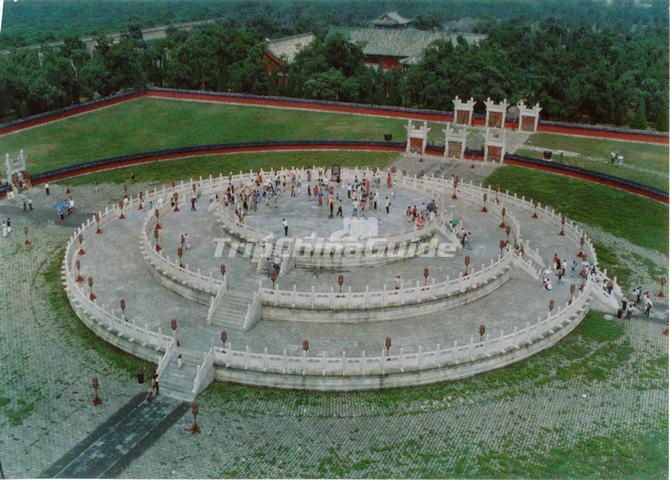
 An aerial view showing the circular and square layouts reflecting Heaven and Earth principles.
The Temple of Heaven is not only a masterpiece of architecture but also a representation of ancient Chinese astronomy and cosmology. Structures within the complex are precisely aligned with celestial movements and seasonal changes, demonstrating sophisticated knowledge of the natural world. The combination of circular and square layouts, along with the orientation of the altars and halls, mirrors the perceived structure of the universe in Chinese philosophy.
Cultural Importance and Modern Usage
Beyond its historical and religious significance, the Temple of Heaven is a cultural hub. Its expansive gardens are used daily by locals practicing Tai Chi, playing traditional instruments, flying kites, and socializing. The serene environment allows visitors to experience the harmony between human life, nature, and spiritual heritage.
 Local residents practicing Tai Chi and enjoying the park areas of the Temple of Heaven.
Visiting the Temple of Heaven offers a unique glimpse into the grandeur of Chinese dynastic rituals, imperial authority, and philosophical traditions. Its combination of ceremonial significance, architectural splendor, and natural beauty makes it a must-visit destination for anyone exploring Beijing.
Summary
The Temple of Heaven stands as a testament to China’s imperial history, religious traditions, and architectural genius. From the Hall of Prayer for Good Harvests to the Circular Mound Altar and Imperial Vault of Heaven, every structure reflects the ancient Chinese understanding of the universe, Heaven, and the emperor’s divine role. Today, it is both a historical monument and a vibrant cultural space, bridging past and present in the heart of Beijing.


