
The Summer Palace (Yihe Yuan) in Beijing is widely regarded as one of the most magnificent imperial gardens in the world. Situated in the northwest suburbs of the capital, it spans over 290 hectares and is famous for its harmonious blend of natural scenery, artificial landscapes, grand architecture, and historical significance. As a UNESCO World Heritage Site, the Summer Palace demonstrates the height of Chinese garden art, combining imperial architecture, religious elements, and natural topography into a living masterpiece.
Visitors can explore Kunming Lake, the man-made Longevity Hill, elegant halls, pagodas, pavilions, temples, bridges, and the world-famous Long Corridor, all imbued with Qing dynasty artistry, cultural symbolism, and imperial leisure culture.
Historical Background
The history of the Summer Palace stretches back centuries, reflecting the changing dynamics of imperial life, art, and politics.
Early Origins
The area of the current Summer Palace was originally used as an imperial garden during the Jin dynasty (1115–1234). It was later enhanced during the Ming dynasty (1368–1644) for recreational purposes, serving as a site for hunting, meditation, and imperial leisure.
Qing Dynasty Transformation
1750 – Garden of Clear Ripples (Qingyi Yuan): Emperor Qianlong ordered the construction of a vast garden to honor his mother’s 60th birthday. The project transformed the area into Kunming Lake and Longevity Hill, with pavilions, halls, and temples designed along a central axis in harmony with the natural landscape.
The design integrated famous Chinese landscapes, drawing inspiration from West Lake in Hangzhou and other scenic sites, reflecting a philosophy of harmonizing nature and human creativity.
The garden’s primary functions were leisure, political retreats, and religious observances, providing a space for emperors to escape the formalities of the Forbidden City.
19th Century Expansion & Reconstruction
The Second Opium War (1860) led to significant destruction of the Summer Palace. Many halls, pavilions, and bridges were burned down.
Empress Dowager Cixi (late 19th century) rebuilt and expanded the Summer Palace, financing much of it by diverting funds from the navy. Under her supervision, the palace became a luxurious imperial retreat, blending practical leisure spaces with ceremonial halls and religious shrines.
The modern layout largely reflects the Qing dynasty restoration, which emphasized grandeur, artistry, and scenic vistas for imperial enjoyment.
Architectural Layout & Key Structures
The Summer Palace is a masterclass in classical Chinese imperial architecture, blending Han dynasty construction principles with Buddhist and Daoist decorative elements.
Kunming Lake
Spanning 2.2 square kilometers, Kunming Lake forms the central water feature, designed to complement the topography of Longevity Hill.
Bridges like the Seventeen-Arch Bridge and Jade Belt Bridge connect islands and create reflective vistas.
The lake is dotted with small islands, such as Nanhu Island, enhancing the scenic experience. Visitors can explore the lake by boat, taking in the interplay of water, sky, and architecture.
Longevity Hill (Wanshou Shan)
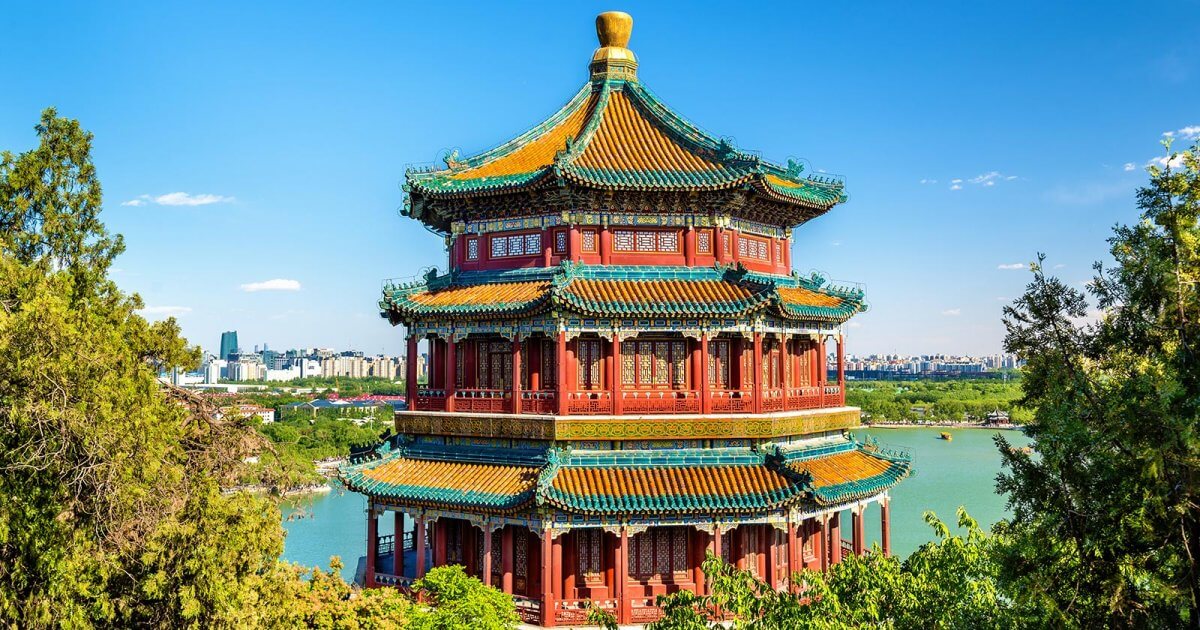
Rising to 60 meters, the hill provides a natural backdrop and supports temples, pavilions, and observation terraces.
The Tower of Buddhist Incense (Foxiang Ge), located at the summit, offers panoramic views of the entire Summer Palace and Kunming Lake.
Stone stairways, carved balustrades, and terraces demonstrate Qing dynasty craftsmanship, blending aesthetic beauty with functional design.
Major Halls and Temples
Hall of Benevolence and Longevity (Renshou Dian): Served as an imperial residence and site for minor ceremonies.
Hall of Joyful Longevity (Leqing Dian): Hosted imperial banquets and celebrations.
Suzhou Street (Su Zhou Jie): A recreated marketplace used for imperial recreation and cultural immersion.
Temple of Buddhist Virtue (Fodao An) & Hall of Immortals: Reflect religious practice integrated into leisure and imperial governance.
The Long Corridor (Chang Lang)
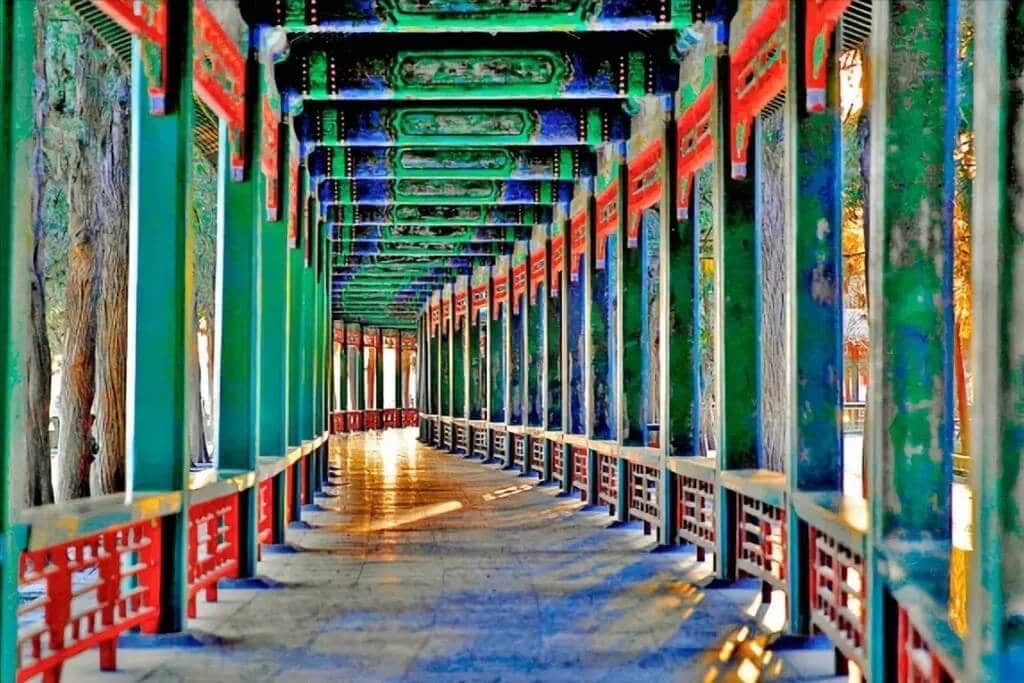
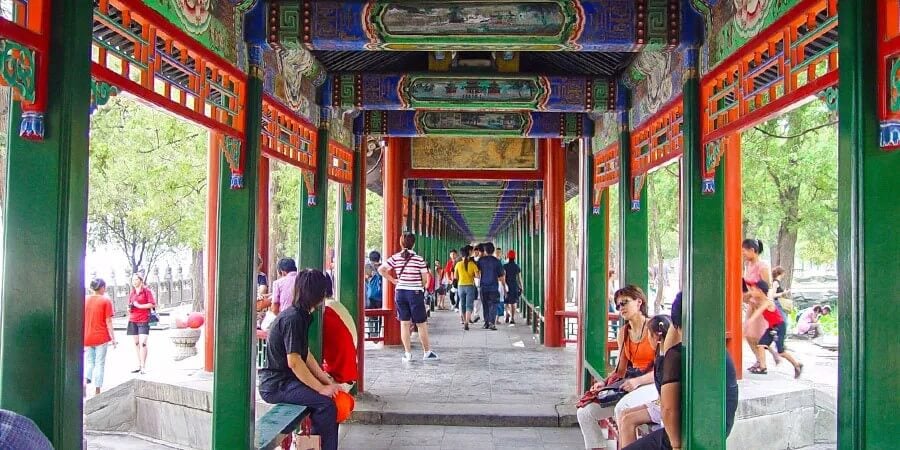
Over 700 meters long, the Long Corridor is lined with over 14,000 painted panels, depicting historical legends, literary tales, landscapes, and traditional motifs.
It is both functional — providing shelter from rain and sun — and artistic, creating a continuous gallery that connects pavilions, halls, and lakeside areas.
Bridges and Stonework
Seventeen-Arch Bridge: Iconic marble bridge with carved lions on each arch, connecting Nanhu Island to the east bank.
Jade Belt Bridge (Yudai Qiao): Curved design symbolizing longevity and aesthetic harmony.
Gardens & Landscaping
The Summer Palace is not merely a collection of buildings; it is a masterpiece of garden and landscape design, emphasizing harmony between natural and man-made features.
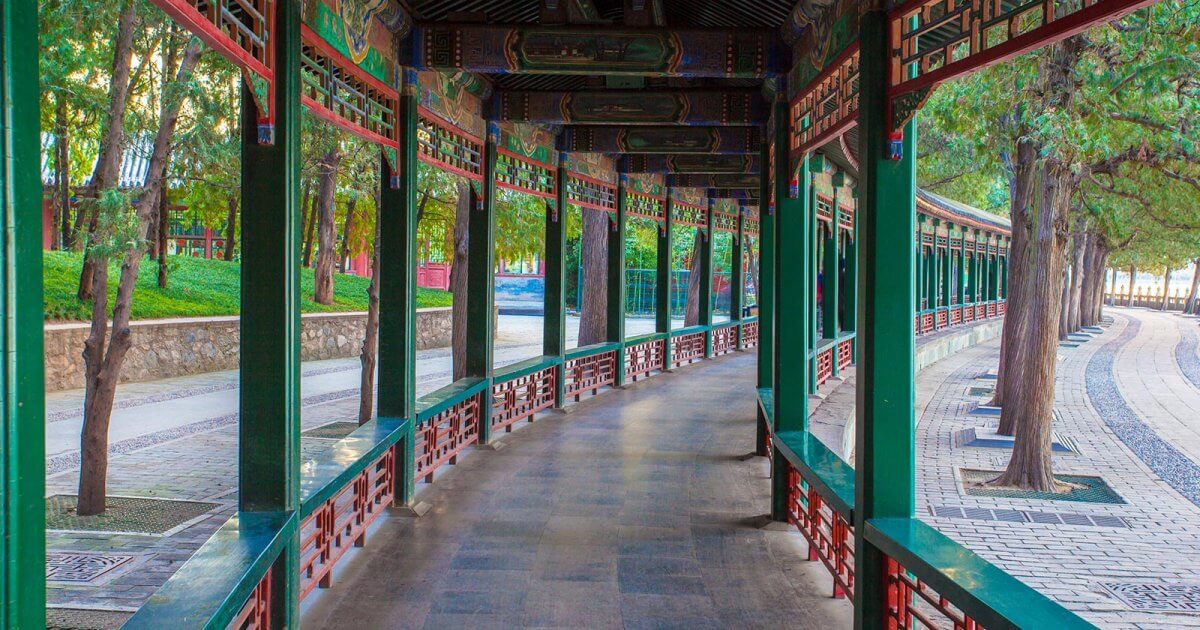
Hills and Water: Longevity Hill and Kunming Lake create a microcosm of Chinese natural scenery.
Flora and Seasonal Beauty: Pavilions are surrounded by lotus ponds, flowering meadows, bamboo groves, and decorative rocks. Each season offers unique visual experiences — cherry blossoms in spring, lotus blooms in summer, vibrant foliage in autumn, and snow-covered landscapes in winter.
Symbolism: Every design element carries cultural meaning — from the lotus symbolizing purity to the arrangement of rocks and hills reflecting Daoist cosmology.
Artistic and Cultural Significance
Painting & Calligraphy: Corridor panels, halls, and bridges feature detailed murals of historical events, legendary tales, and natural scenery.
Sculpture & Carving: Marble bridges, stone lions, and pavilion decorations display intricate carving techniques.
Religious Elements: Buddhist and Daoist temples within the palace reflect spiritual practices of the imperial family.
Imperial Leisure Culture: The palace served as a setting for music, poetry, painting, and theater, embodying Qing dynasty court life.
Empress Dowager Cixi & Imperial Leisure
Cixi used the Summer Palace extensively as a summer retreat, escaping Beijing’s heat and political pressures.
She hosted banquets, cultural events, and artistic gatherings, transforming the palace into a hub of elite imperial leisure.
The combination of lakes, hills, corridors, temples, and markets provided a fully immersive environment, blending relaxation, spirituality, and aesthetic appreciation.
Modern Preservation and Tourism
- Designated as a UNESCO World Heritage Site in 1998 for its outstanding natural and cultural values.
- Today, the Summer Palace is a living museum, attracting millions of visitors annually.
- Visitors can:
- Stroll along the Long Corridor
- Climb the Tower of Buddhist Incense
- Sail on Kunming Lake
- Explore pavilions, temples, and Suzhou Street
- Modern amenities include guided tours, educational programs, and cultural exhibitions while preserving historical integrity.
Visiting Tips
Recommended duration: 3–5 hours for a thorough visit.
Best seasons: Spring (flowers) and Autumn (foliage).
Comfortable shoes are recommended due to extensive walking and stairs.
Respect cultural and religious sites; do not touch artifacts or disturb ongoing rituals.
Cultural, Historical, and Educational Significance
- Architectural Masterpiece: Exemplifies traditional Chinese garden and palace design, combining landscape, architecture, and artistry.
- Imperial Life Insight: Offers a glimpse into Qing dynasty emperors’ leisure, governance, and ceremonial practices.
- Artistic Heritage: Houses murals, sculptures, and carvings representing the height of Qing craftsmanship.
- Religious Harmony: Integrates Buddhist and Daoist practices within an imperial context.
- Tourism & Education: Serves as a cultural hub, teaching visitors about Chinese history, art, and architecture.
Conclusion
Beijing Summer Palace is more than a garden; it is a living emblem of Qing dynasty culture, leisure, and artistry. From the expansive Kunming Lake to the scenic Longevity Hill, from ornate halls to intricate corridors, the Summer Palace showcases centuries of Chinese architectural excellence, landscape design, and cultural sophistication.
For travelers, historians, artists, and spiritual seekers alike, the Summer Palace offers a unique window into imperial China, combining history, art, nature, and culture into a timeless, harmonious experience.


